
Emergency
Emergency Water Extraction Port St. Lucie, FL
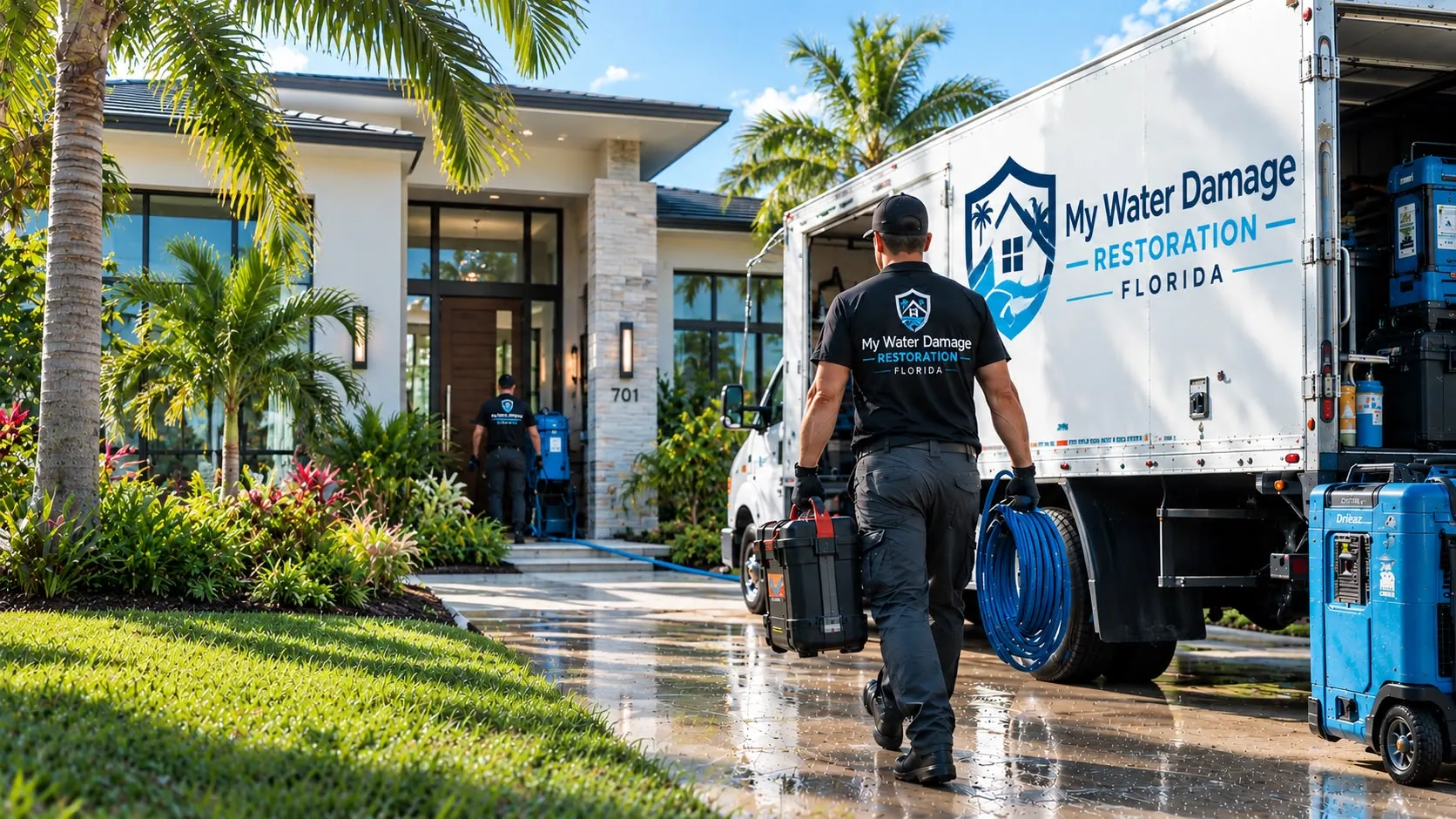
Standing water removed before it soaks into slab, block and flooring - the first step after any failure, and the one humid air makes urgent. Standing water is removed before it soaks further into the slab, the block and the flooring. Where it came from outside the building, what it carried is established before anything is kept.
Wet days later? That is worth a call
Often needed alongside
- Humidity & Moisture Drying
When the outdoor air is wetter than the building, opening windows adds water. Drying means a closed building and conditioned air.
- Storm Surge & Tidal Flooding
Surge and tidal water rise from the ground up and carry salt and silt with them. Anything porous they soaked is treated as contaminated.

Frequently asked questions
Why does the drywall on an outside wall of a Port St. Lucie block house feel damp?
Where a house of the 2000s has concrete block walls with drywall on furring strips inside, there is a thin air space between the block and the drywall. Rain that soaks into the block in the wet months reaches that space, and the drywall's back, kept cold by the cooling, is where it condenses and settles. Baseboards and outlet boxes on that wall show it first.
What does a stormy June do to a Port St. Lucie septic system?
Storms that arrive day after day in June leave the soil around a drain field no time to drain between them, and the field stops accepting water. Across Port St. Lucie, on ground about 23 feet above sea level, some 17,650 homes have septic systems on record, and in any of them the household's water then rises back toward the lowest drain. A slow tub or gurgling toilet is the early sign.
Should a Port St. Lucie homeowner open the windows on a cool summer morning?
Usually not. Even a cool June morning here carries more water than the air the cooling has dried indoors, and opened windows let it reach the cold inner faces of block walls, the back of drywall and furniture against outside walls, where it condenses. Keeping the house closed and letting the cooling run keeps the indoor air drier than those surfaces.
These questions also sit on the Port St. Lucie page, next to its numbers.