
Emergency
Emergency Water Extraction St. Cloud, FL
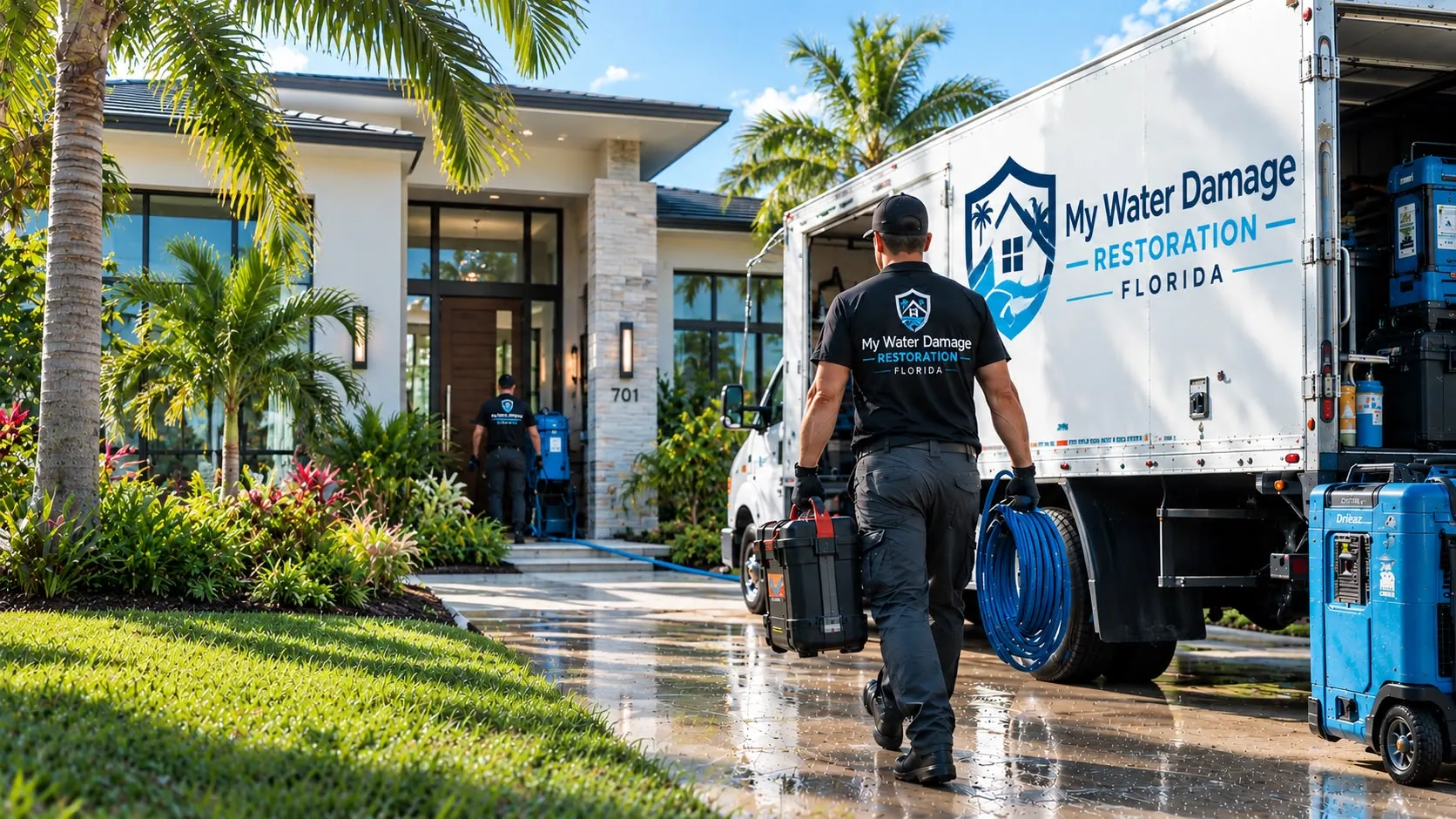
Standing water removed before it soaks into slab, block and flooring - the first step after any failure, and the one humid air makes urgent. Standing water is removed before it soaks further into the slab, the block and the flooring. Where it came from outside the building, what it carried is established before anything is kept.
One call reaches a local pro nearby
Often needed alongside
- Humidity & Moisture Drying
When the outdoor air is wetter than the building, opening windows adds water. Drying means a closed building and conditioned air.
- Storm Surge & Tidal Flooding
Surge and tidal water rise from the ground up and carry salt and silt with them. Anything porous they soaked is treated as contaminated.

Frequently asked questions
How can a variable-speed system leave a newer St. Cloud house clammy?
A cooling coil removes water best when air crosses it slowly. In a house from around 2003 with a two-stage or variable-speed system, an installer or owner may set the fan for its highest airflow, which cools the rooms quickly but moves the air past the coil too fast to wring much water out. A lower airflow setting, or a dehumidify mode, leaves the rooms drier.
Where should a St. Cloud downspout empty?
Onto ground that falls away from the house, a few feet out. Where a downspout empties onto a walk or patio that slopes back toward the foundation, each June storm sends the rain from that part of the roof straight to the slab edge and the bottom of the wall. An extension, a splash block or a short pipe that carries it past the paving keeps that corner dry.
Does St. Cloud's height above sea level keep water out of its houses?
Of the sea, yes. St. Cloud's center stands about 72 feet above sea level, beyond any tide, so water in a house here comes from the rain, the humid air and the house's own plumbing and cooling. That narrows the search: a damp wall or floor usually traces to a downspout, a condensate line, a supply pipe or air reaching a cold surface.
Back to St. Cloud for the housing and weather behind them.