
Emergency
Emergency Water Extraction Wellington, FL
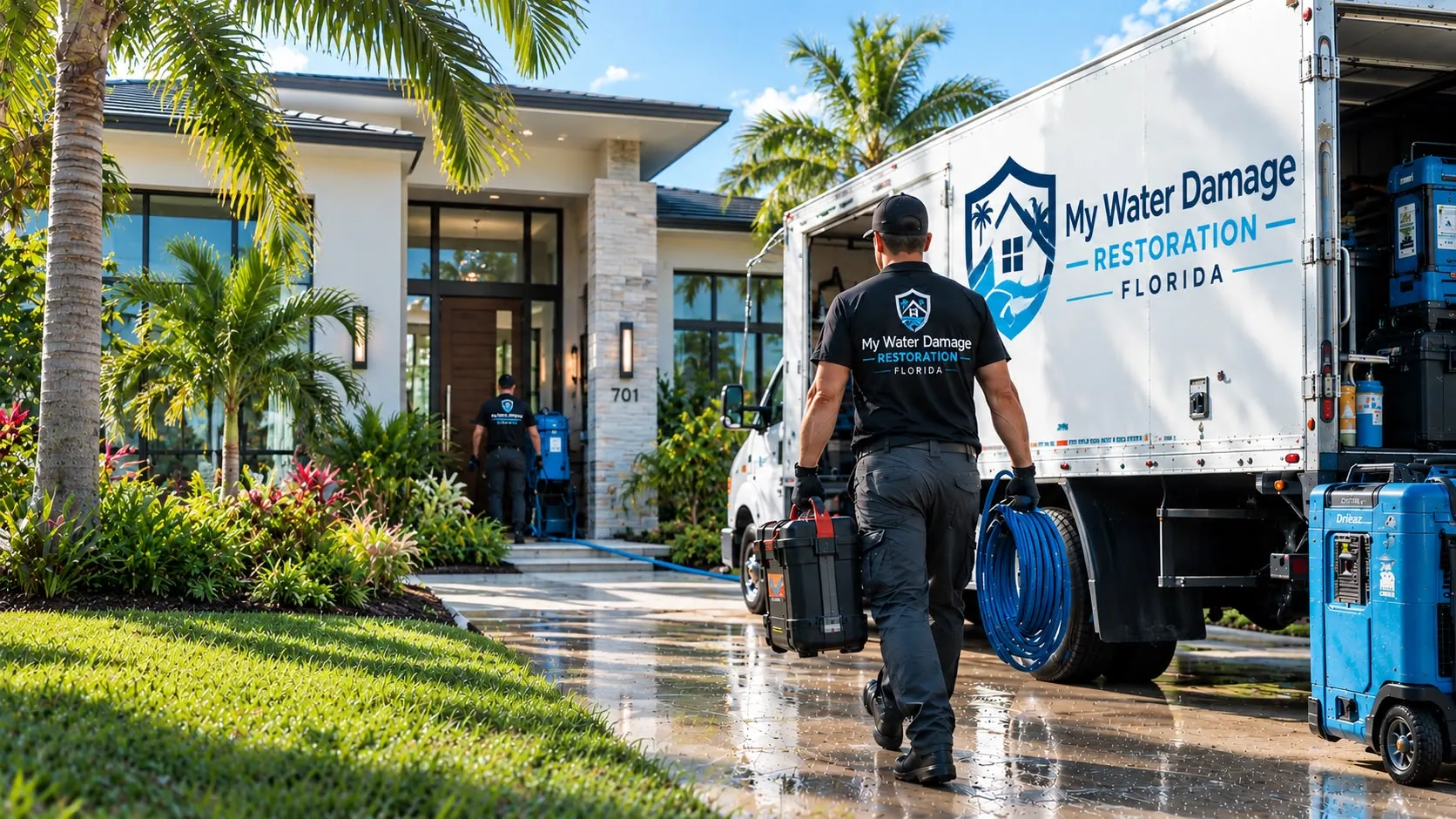
Standing water removed before it soaks into slab, block and flooring - the first step after any failure, and the one humid air makes urgent. Standing water is removed before it soaks further into the slab, the block and the flooring. Where it came from outside the building, what it carried is established before anything is kept.
One call reaches a local pro nearby
Often needed alongside
- Humidity & Moisture Drying
When the outdoor air is wetter than the building, opening windows adds water. Drying means a closed building and conditioned air.
- Storm Surge & Tidal Flooding
Surge and tidal water rise from the ground up and carry salt and silt with them. Anything porous they soaked is treated as contaminated.

Frequently asked questions
Who drains the land under a Wellington home?
The Acme Improvement District, created by the legislature in 1953 to drain the area and to build and keep canals and other drainage works, making it habitable for settlement and farming. Since the village incorporated in 1995, the district and the village have shared one governing board. Its system includes 91 miles of canals, 270 acres of detention lakes and stormwater pumps at nine sites.
After a storm, how does the canal behind a Wellington house empty?
North, in the end. Basin A, about 16 square miles between Southern Boulevard and Pierson Road, discharges into the C-51 West Canal through pumps near Southern Boulevard. Basin B, about 13.6 square miles to its south, drains into Basin A first. After an August storm, the canal behind a house rises until those structures and pumps carry the water on.
Why are Wellington's canals held lower in the wet season?
The district sets Basin A's canals at 11.0 feet in the wet season and 12.0 feet in the dry season, and Basin B's at 12.0 and 13.0. A lot backing onto a canal sees its water rise after each storm and fall again as the pumps work it down.
Each answer ties back to the Wellington overview.